ServicesWhole-house carbon filtration
Whole-House Carbon Filtration in University Park
A properly sized carbon system at your main water line removes disinfectant taste and odor from every tap and shower in your home. We test first, match the carbon to your water, and give you a written estimate so you can plan the install on your schedule.
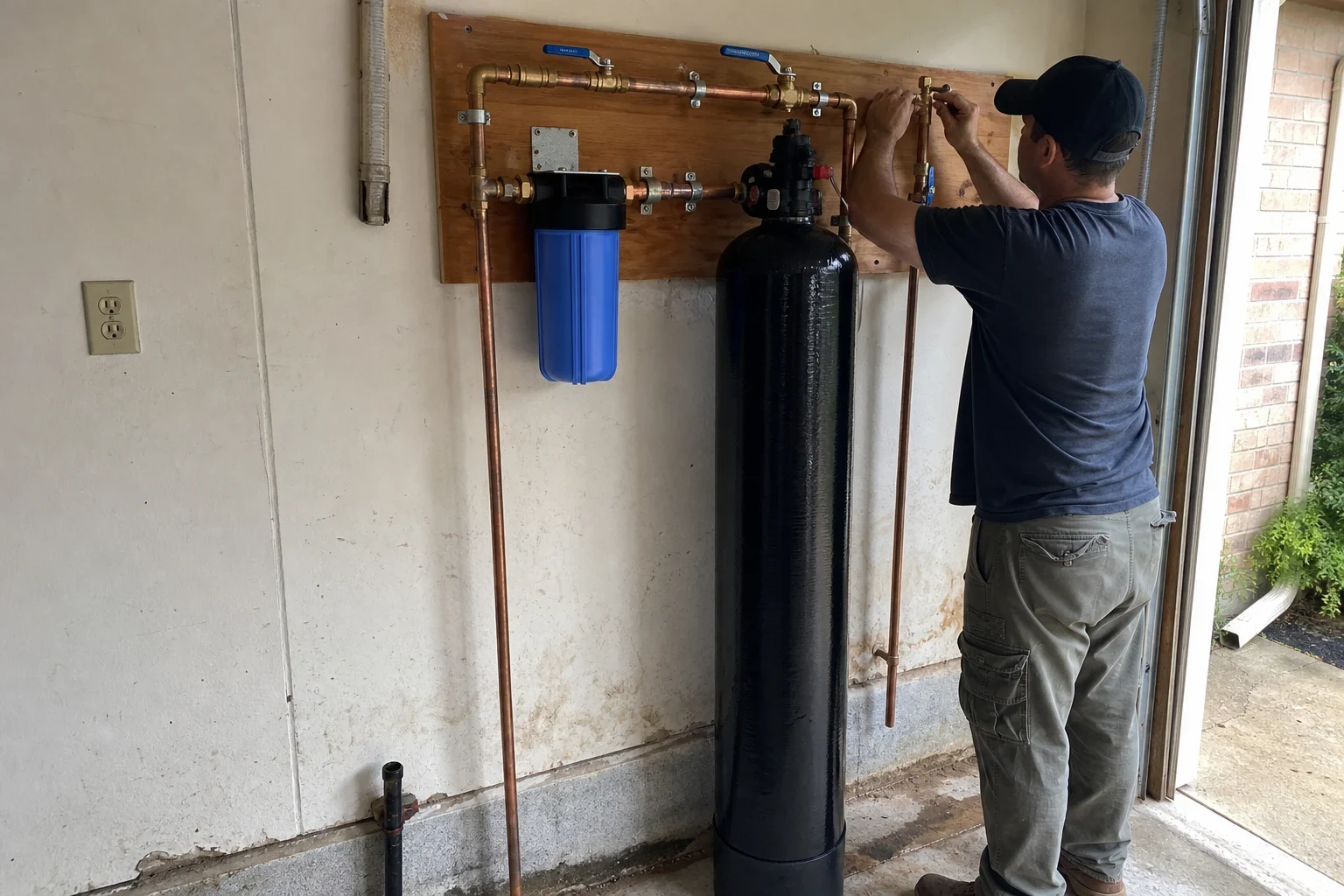
How main-line carbon treats every tap
Utilities add a disinfectant so water stays clean on its trip through miles of mains. That job ends once the water reaches your meter, but the taste and odor stay with it, and some people notice drier skin and hair after showering. Installed at the point where the service line enters your home, a carbon tank adsorbs those compounds before the water branches off to the kitchen, bathrooms, laundry and water heater.
The detail that matters most is which disinfectant your utility uses. Free chlorine is removed easily by standard granular activated carbon. Chloramine, which many North Texas systems use, breaks down much more slowly, so it needs catalytic carbon and a tank large enough to give the water enough contact time. We check your utility's water quality report and test at your tap before recommending media, so the system is built for the water you actually have.
Planning ahead pays off here. The carbon media wears out on a predictable curve, and knowing that schedule from day one means replacement is a line in your budget, not a surprise.
What the work includes
- Tap test before sizing
- We measure total and free chlorine at your faucet and note your incoming pressure. Those numbers decide the carbon type and tank size.
- Catalytic or standard carbon
- Catalytic carbon for chloramine, standard coconut-shell carbon for free chlorine. Using the wrong one is the most common reason a carbon system stops working early.
- Tank sized to your flow
- We size by bathrooms and peak demand so two showers and the dishwasher can run without a noticeable pressure drop. An undersized tank pushes water through too fast to filter it well.
- Sediment prefilter
- A cartridge ahead of the carbon catches grit and pipe scale so the carbon bed does not clog. It is cheap to change and protects the more expensive media.
- Bypass valve and fittings
- A three-valve bypass lets you send water around the system for service without shutting off your home. We use brass or PEX fittings matched to your existing line.
- Cleanup and a service plan
- We clean up the work area, show you how the bypass works, and leave a written schedule for prefilter and media changes.
Signs a whole-house carbon filter is the right call
Pool smell from the shower
A chlorine odor in hot water is common because heat releases it into the air. A pitcher filter at the kitchen does nothing for that.
Drinking water tastes flat or chemical
If you already filter at the sink but notice the taste in coffee, ice or cooking water from other taps, the fix belongs at the main line.
Dry skin or itchy scalp after bathing
Some people react to disinfectant in shower water. Removing it at the source treats every bathroom at once.
Several point-of-use filters to maintain
Shower heads, fridge filters and faucet units each need their own cartridges. One tank can replace most of that upkeep.
Rubber parts wearing out early
Chloramine is known to break down some rubber seals and flappers over time. If you replace toilet parts often, it is worth testing.
How an install day runs
- 1
Test and estimate
We test your water, look at where the main enters, and give you a written, line-item estimate. You decide if and when to schedule.
- 2
Pick the location
Most systems go near the main shutoff, often in a garage or on an exterior wall with a cover. Backwashing tanks need a drain nearby, so we plan that before install day.
- 3
Install and flush
We shut off the water, cut in the bypass and tank, and flush the new carbon until fines clear. Most homes are without water for a few hours.
- 4
Verify at the tap
We retest chlorine at a faucet after the system is running. You see the before and after numbers yourself.
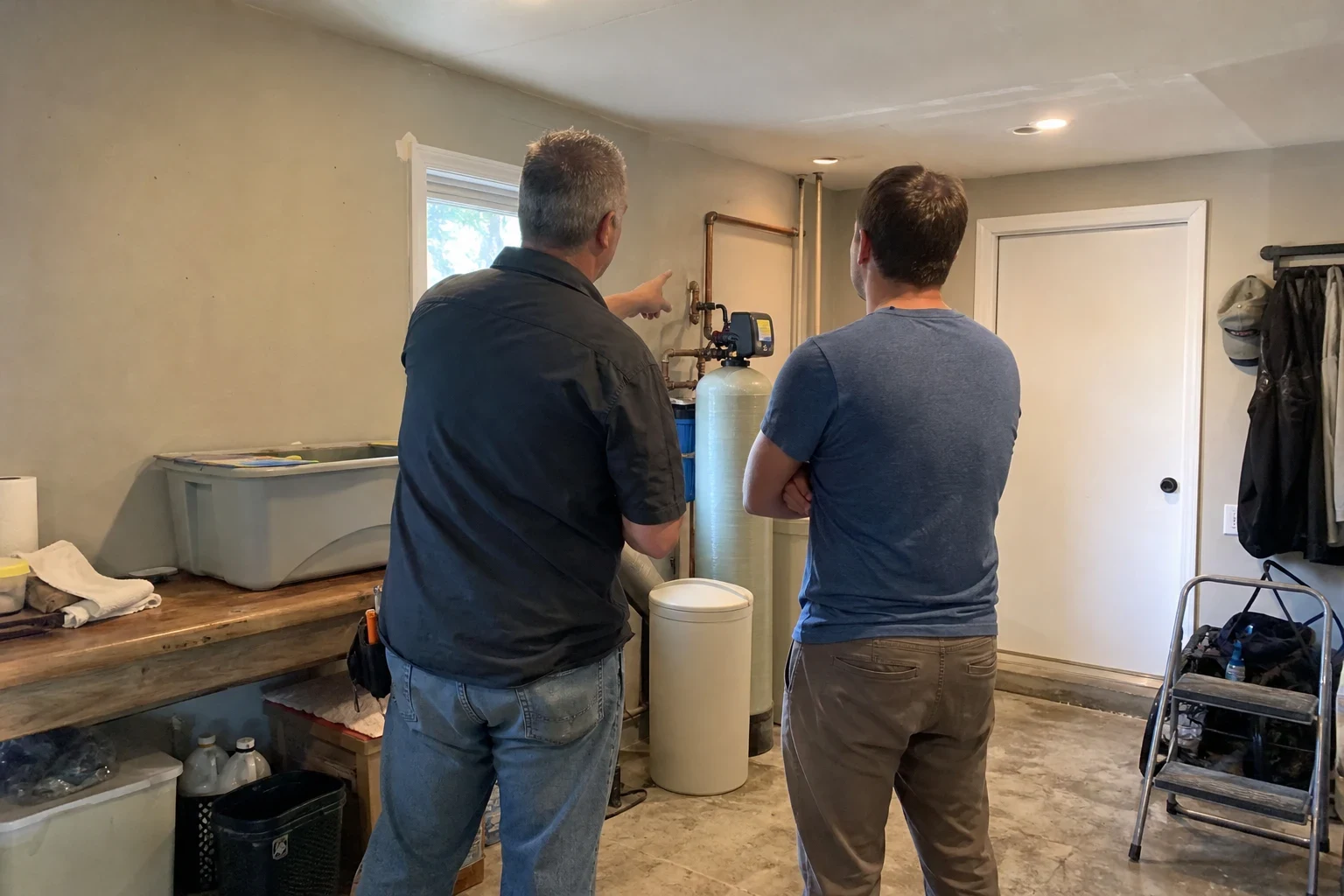
What moves the cost
We quote after testing because the water and your plumbing set the price, not a menu. Your estimate lists each part and labor item separately. These are the factors that change it most.
- Carbon type
- Catalytic carbon for chloramine costs more than standard carbon and usually needs a larger bed.
- Tank size and flow rate
- More bathrooms and higher peak demand call for a bigger tank and larger valve.
- Backwashing or upflow design
- A backwashing control head adds cost and needs a drain and outlet. A non-backwashing upflow tank is simpler but suits fewer homes.
- Access to the main line
- An easy garage connection is quicker than rerouting an exterior line or adding a drain.
- Ongoing media and prefilters
- Budget for prefilter cartridges and an eventual carbon change. We give you that schedule up front.
Questions about whole-house carbon filtration
Something not covered here? (214) 379-7564
Is my water pressure going to drop after the install?
Not in a way you should feel, provided the tank fits your home's demand. Pressure complaints almost always trace back to a tank too small for the number of bathrooms, or to a prefilter cartridge left in place until it clogs. We size the bed for your busiest hour of water use and walk you through checking the prefilter gauge.
How long does the carbon last?
Two things set carbon life: the total gallons that pass through the bed and the disinfectant level arriving from the street. A large family on chloramine spends the media sooner than a couple on free chlorine. At install we write down an expected change interval, and a quick chlorine check at a faucet tells you when the bed is spent.
Does whole-house carbon remove lead or hardness?
No. Carbon targets disinfectants and some organic compounds. Lead from old fixtures is better handled with under-sink reverse osmosis at the drinking tap, and hardness is a water softener question that starts with a hardness test.
Do I still need a drinking water filter?
Many homes are happy with carbon alone. If you want extra treatment for drinking and cooking water, under-sink reverse osmosis pairs well, and the carbon upstream protects its membrane.
Is the water safe to drink without chlorine in it?
Yes, as long as the water is used normally. Disinfectant protects water on its way through city mains, and removing it inside your home is standard practice. If a house sits empty for weeks, run the taps before using the water.
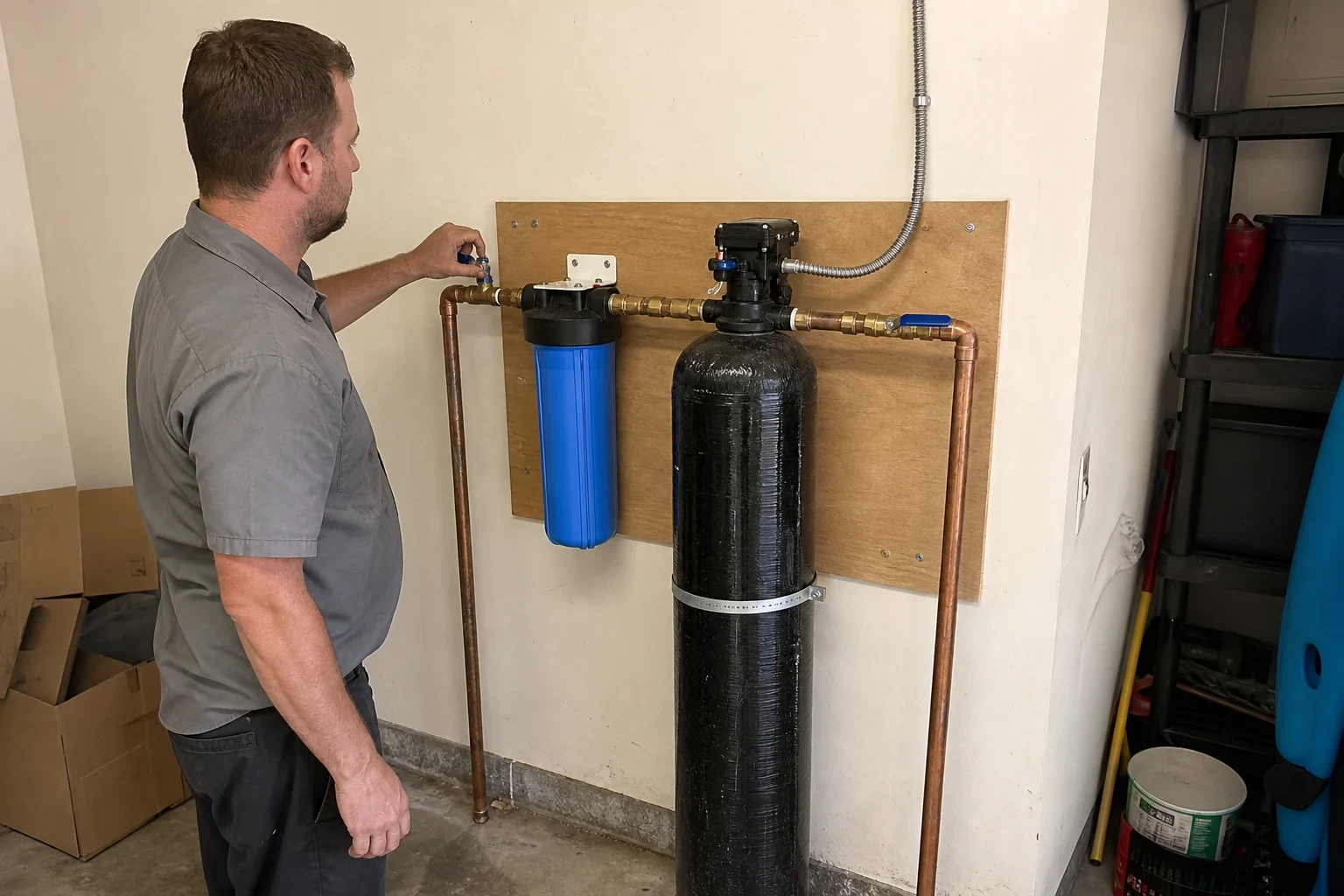
Put carbon filtration on your calendar
We will test your tap water, explain which carbon fits, and give you a written estimate with the maintenance schedule included. Then you choose the timing.