ServicesUnder-sink reverse osmosis
Under-Sink Reverse Osmosis in University Park
We install under-sink reverse osmosis systems that filter the water you drink and cook with through a sediment stage, carbon block and membrane. Before we drill a single hole, you get a written estimate and a year-by-year filter schedule, so the upkeep is planned and never a surprise.
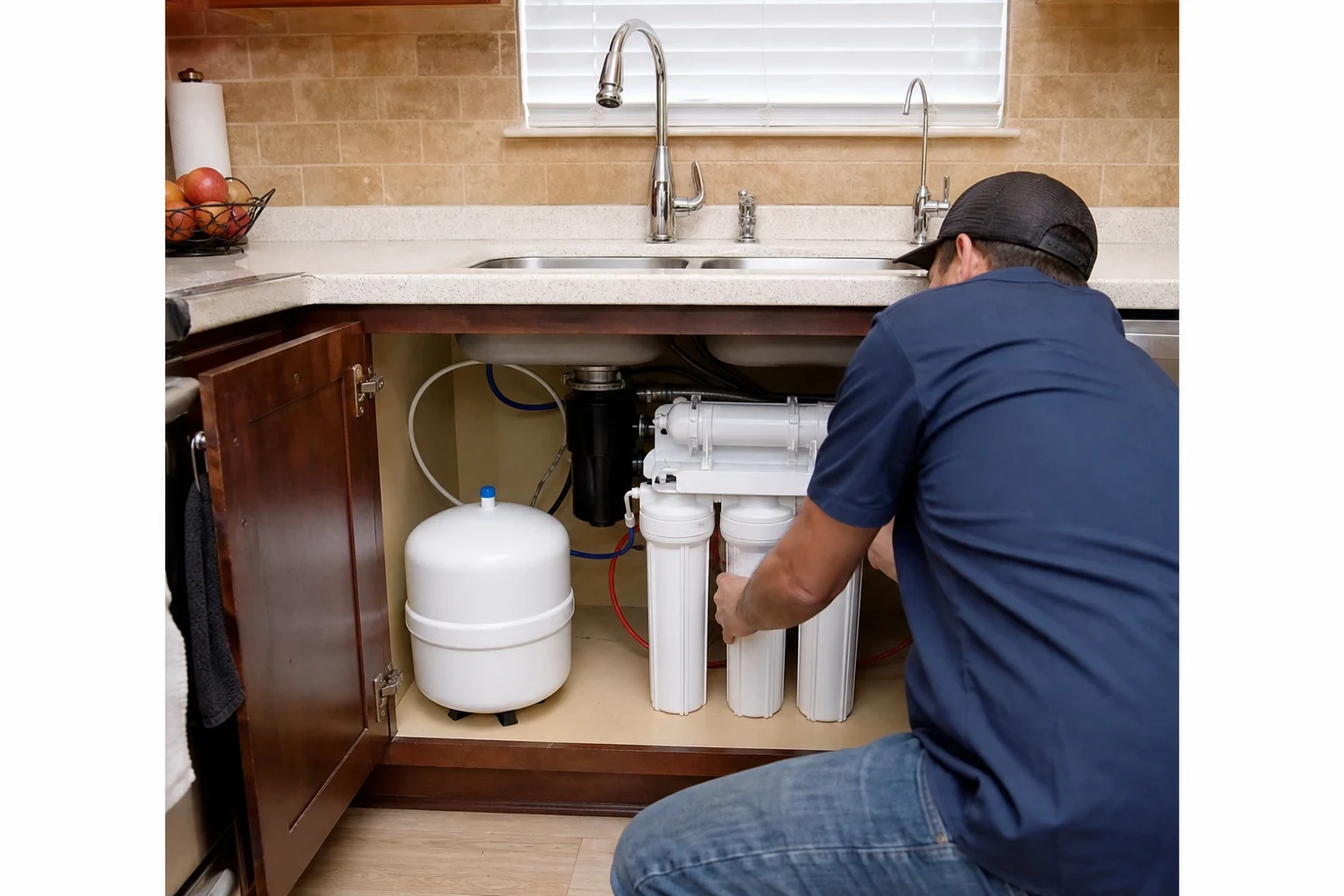
What an RO System Does at Your Kitchen Sink
Reverse osmosis pushes water through a thin-film composite membrane with pores small enough to hold back dissolved metals like lead, along with salts and many trace contaminants. Ahead of the membrane, a sediment prefilter catches grit and a carbon block removes chlorine, which would otherwise break down the membrane over time. Treated water collects in a small pressurized tank and passes through a final carbon polishing filter on its way to a dedicated faucet.
It is the right call when your concern is the glass of water in your hand: taste, lead picked up from older pipes or fixtures, or simply wanting another layer of filtration for drinking and cooking. It is not meant to treat the whole house. If chlorine odor in the shower bothers you, whole-house carbon filtration is the better fit, and the two work well together.
We plan the purchase and the upkeep together. Prefilters, the membrane and the postfilter each wear out on a different schedule, and you should know those intervals and what they cost before you choose a unit.
What Our RO Installation Includes
Pressure and water check first
We measure incoming water pressure and take a TDS reading at the tap. A membrane needs steady pressure to work well, and low readings tell us early whether a booster pump belongs in the plan.
Dedicated faucet mounting
We use an existing sprayer or soap hole when one is free. If not, we drill the countertop with the right bit for granite, quartz or laminate and seal the faucet base.
Feed valve and drain saddle
A shutoff valve tees into your cold line, and a drain saddle clamps onto the sink drain above the P-trap so reject water leaves cleanly without siphoning back.
Tank, filters and tubing under the sink
We mount the filter housings, set the tank precharge, and route the tubing so you can still reach the disposal and the trash pull-out. An optional line to the refrigerator ice maker can be added at the same visit.
Flush, leak check and first reading
We flush the carbon stages and the first tank of water, check every fitting for drips, then take a TDS reading so you can see the drop for yourself.
A written filter schedule
You leave with the part numbers and change intervals for each stage, so you can budget for them or have us handle filter replacement and maintenance.
Signs an Under-Sink RO System Makes Sense
Your home has older plumbing
Lead usually comes from old service lines, solder or brass fixtures inside the house, not from the utility. RO is one of the most reliable ways to reduce it at the drinking tap.
You buy cases of bottled water
If bottled water is the household default, a system at the sink costs less over a few years and ends the trips and plastic.
Coffee and ice taste off
Chlorine and dissolved minerals change the flavor of coffee, tea and ice. Carbon plus a membrane clears up most of that.
A water test flagged something
If water testing showed lead, high total dissolved solids or another contaminant you want lower, RO is often the targeted answer for drinking water.
Your current RO is slow or sounds off
A faucet that trickles or a drain that runs nonstop usually points to a clogged membrane or a failed auto shutoff valve. We can tell you whether repair or replacement is the better spend.
How the Job Runs
- 1
Phone conversation
We ask about your sink, countertop and what is bothering you about your water. That usually tells us which system types fit.
- 2
Look under the sink and estimate
We check space, the drain layout, the cold supply and water pressure, then give you a written, line-item estimate that includes the first year of filter costs.
- 3
Installation day
Most installs take a couple of hours. We lay down a mat, clear the cabinet, mount everything and clean up the drill dust before we leave.
- 4
Walkthrough and schedule
We show you how to close the feed valve, where each filter sits and when each one is due, and we leave the schedule taped inside the cabinet door.
What Moves the Cost of an RO System
An RO system has two costs: the install and the filters it needs every year after. We price both up front, so you are comparing the real cost of owning each option, not just the box. Your estimate is written out line by line.
- Tank or tankless design
- Tank systems are simpler and quieter. Tankless units take less cabinet space and give faster flow but usually cost more and need an electrical outlet.
- Countertop material
- Drilling quartz or granite takes more time and tooling than laminate, or using an existing hole.
- Water pressure
- If pressure is low, a booster pump keeps the membrane efficient and adds parts and an outlet requirement.
- Extra stages and lines
- A remineralization filter, a UV stage or a run to the refrigerator each add parts and labor.
- Ongoing filter changes
- Prefilters typically change every six to twelve months and membranes every two to four years, depending on use and water quality. We put those intervals in writing so you can budget ahead.
Under-Sink RO Questions
Something not covered here? (214) 379-7564
How much water goes down the drain with RO?
The membrane needs a steady rinse of reject water to carry away what it holds back, so part of the flow always leaves through the drain line. The amount depends on the design. Older units can send several gallons out for each gallon of drinking water, while newer membranes and permeate pumps bring that ratio down considerably. Before you buy, we show you the rated ratio for the specific unit so you can weigh it against the price.
Will RO remove the minerals I actually want?
Yes, the membrane removes most dissolved minerals along with what you want gone. Food is the main source of calcium and magnesium for most people, but if you prefer the taste of mineralized water, we can add a remineralization stage.
How long does a membrane last?
Usually two to four years. Changing the carbon prefilter on time matters most, because chlorine that gets past it damages the membrane early. A falling TDS drop is the clearest sign a membrane is wearing out.
Should I test my water first?
If you suspect lead or another specific contaminant, testing first is worth it. It confirms RO is the right tool and gives you a baseline. Our water testing service can be done before the install or on its own.
Can it connect to my refrigerator?
Usually, yes. We run tubing from the RO tank to the ice maker and water dispenser. If the fridge has its own filter, we often bypass it so you are not paying for two.
Plan Your Drinking Water Setup
Tell us about your sink and what you want out of your water. We will lay out the install, the filters and the yearly upkeep before any work starts.