ServicesWater testing
Water Testing in University Park
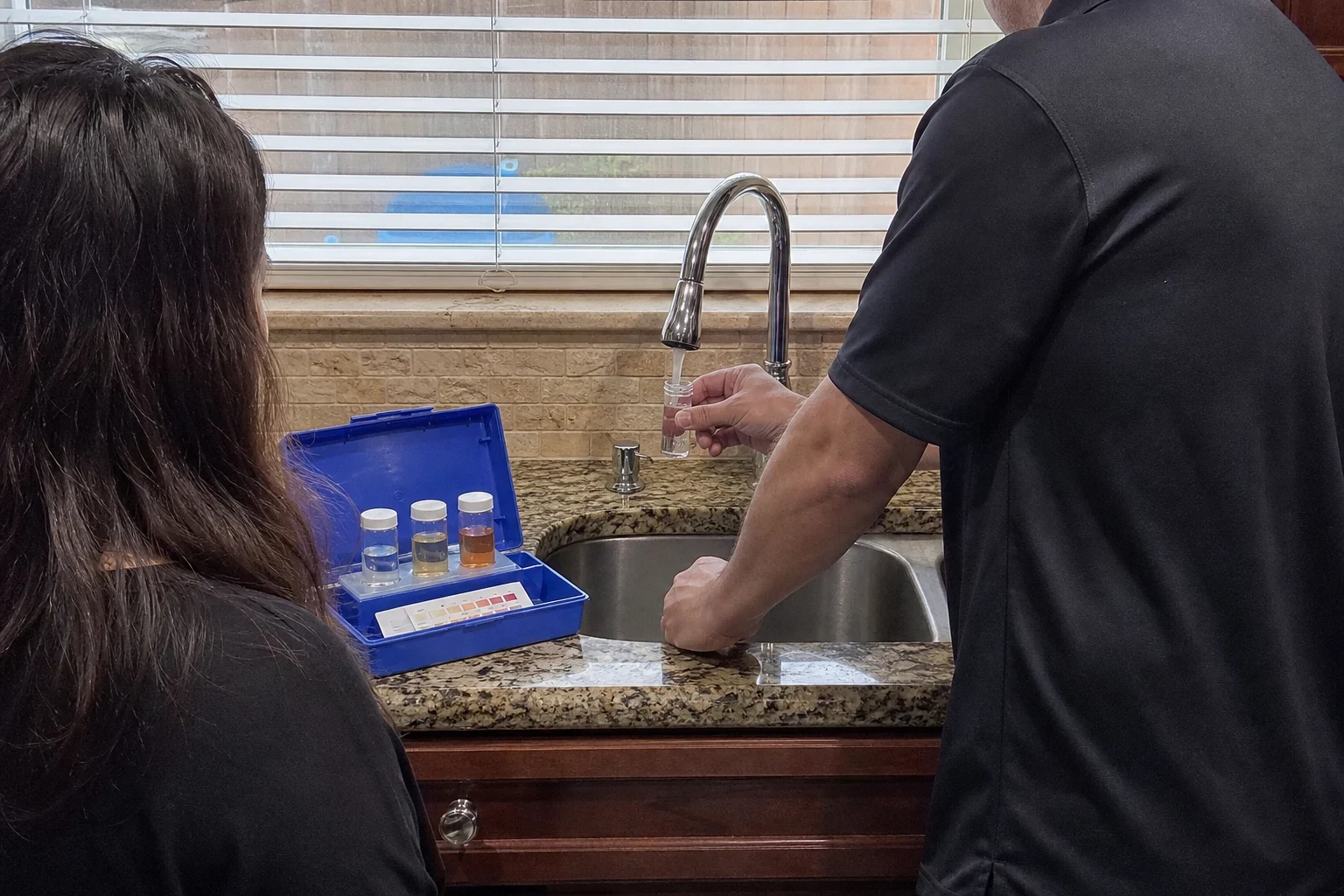
We test the water in your home for hardness, disinfectant, iron, dissolved solids and lead. Then we explain the numbers in plain terms, so you can decide whether you need a filter, which one, and when to budget for it. Sometimes the answer is that you need nothing.
Test results first, equipment second
Most filtration sales start with a product. We start with a measurement. A softener, a carbon tank and a reverse osmosis unit each solve a different problem, and buying the wrong one costs money and still leaves you with the original complaint. A test tells you which problem you actually have.
City water is treated and monitored before it reaches your meter. What changes after that point happens inside your home: in old galvanized or copper lines, in a water heater full of scale, or in a faucet with brass parts. That is why two houses on the same street can get very different results.
Testing also gives you a baseline. When you know your hardness in grains per gallon and your chlorine level today, you can plan a purchase on your schedule and check later whether a system is doing its job.
What a water test covers
- Hardness, measured in grains per gallon
- We read calcium and magnesium in your home and express the total in grains per gallon. That figure tells you whether a softener is worth buying or would be spending money on a problem your water does not have.
- Chlorine versus chloramine
- At the kitchen faucet we measure both free and total chlorine. The difference between them matters, since chloramine is tougher to strip out and calls for catalytic carbon instead of the standard kind.
- Iron, manganese and pH readings
- Iron is the usual cause of orange or brown staining, while manganese leaves black marks. The pH reading shows whether your water tends to eat at metal pipes from within.
- Dissolved solids (TDS)
- A TDS meter gives a fast overall measure of what is dissolved in your water. We use the same reading later to check that a reverse osmosis membrane is doing its work.
- Lab lead sample for older pipes
- No countertop meter can measure lead. We take the first water drawn after it has sat in the pipes overnight and ship that sample to an independent lab.
- Results in writing
- Each result is printed beside the usual reference limit, along with a short explanation of what it means for your house.
Signs it is time to test your water
A pool or bleach smell
A strong disinfectant odor at the tap is the most common complaint we hear. Testing tells us the level and type, which decides the right carbon filter.
White crust on fixtures
Scale on showerheads and faucet aerators points to hardness. Before buying a softener, confirm the grain count, since mild hardness rarely justifies one.
Stains in sinks or laundry
Rust-colored rings in toilets or yellowed whites point to iron. The test shows whether it comes from the water supply or from corroding pipes.
Original pipes in an older house
Homes built before the late 1980s may have lead solder on copper joints or galvanized steel lines. A lab sample is the only way to know whether any of it reaches your glass.
You are about to buy a filter
If someone has quoted you a system without testing first, test before you sign. It costs far less than the wrong equipment.
How a test visit runs
- 1
Scheduling by phone
We ask about the age of your home, what you are noticing and whether you already have any filters. If lead is a concern, we explain how to leave the water unused overnight so the morning sample is accurate.
- 2
Sampling at the taps
We draw water at the kitchen sink and usually one other fixture, before any existing filter. On-site tests for hardness, chlorine, pH, iron and TDS take about half an hour.
- 3
Lab sample if needed
Lead and any other lab-only tests are bottled, labeled and sent out. Those results come back separately, and we go over them with you once they arrive.
- 4
Your options and a timeline
We walk through each result and tell you what, if anything, is worth treating. If a system makes sense, we give you a written line-item estimate so you can plan the purchase now or set it aside for later.
What affects the cost of testing
A basic on-site panel is the simplest visit. The price climbs mainly when lab analysis is added or when more of the house needs to be sampled. We tell you what the visit includes before we come out, so there is no added line on the day.
- On-site panel or lab analysis
- Meter and reagent tests are quick and done in your kitchen. Lab tests for lead or other trace metals add the lab fee and shipping.
- Number of sample points
- One kitchen tap covers most questions. Testing before and after an existing system, or at a separate well line, adds sampling time.
- Checking existing equipment
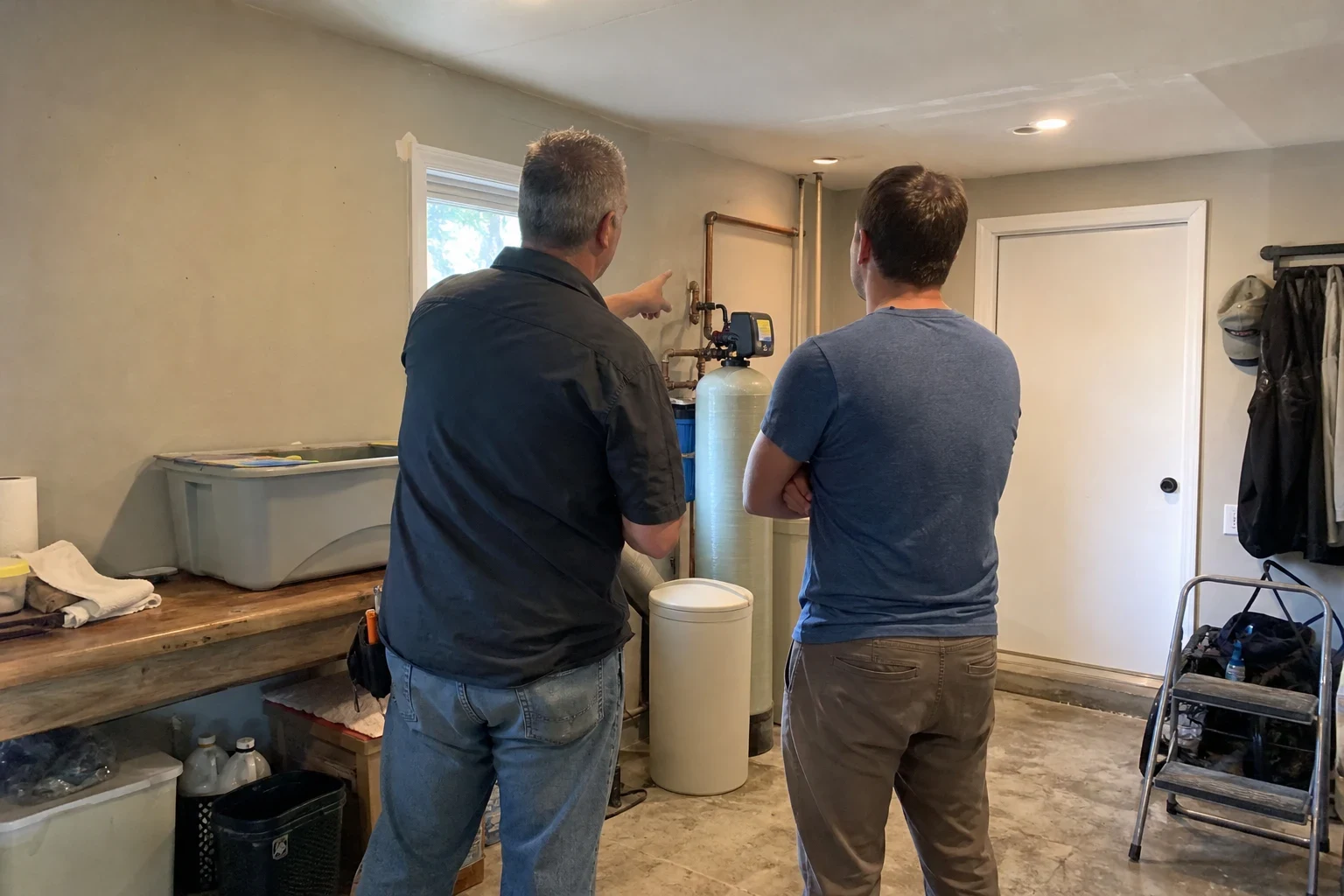
- If you already have a softener or carbon tank, we can test its output to see whether the media is spent. That is often the first step toward filter replacement and maintenance.
Water testing questions
Something not covered here? (214) 379-7564
Doesn't the city already test my water?
It does. The utility samples at the plant and throughout its mains, and it publishes those results. But its responsibility ends at your meter. Lead, iron shed by corroding pipe and scale all come from the plumbing inside your house, and you only see them by testing at your own faucet.
Would a test kit from the hardware store do the job?
Test strips are a reasonable first check on hardness and chlorine, but they are too rough to size a softener or clear you of lead. That is why we work with calibrated meters and have lead samples analyzed by a lab.
Is the test just a lead-in to a sales pitch?
We only suggest equipment when the results call for it. Plenty of homes here need no more than a decent drinking filter, and we tell you that plainly. When something is worth treating, you get a written estimate and can take as long as you like to plan.
When will my results be ready?
You have the on-site numbers before we pack up. Lead results from the lab take more time, and we call you to go over them once they arrive.
When should I test again?
Test again after plumbing changes, when a new taste or stain appears, or when equipment goes in. Once a new system is running, a second test shows whether it is doing its job.
Get real numbers before you budget
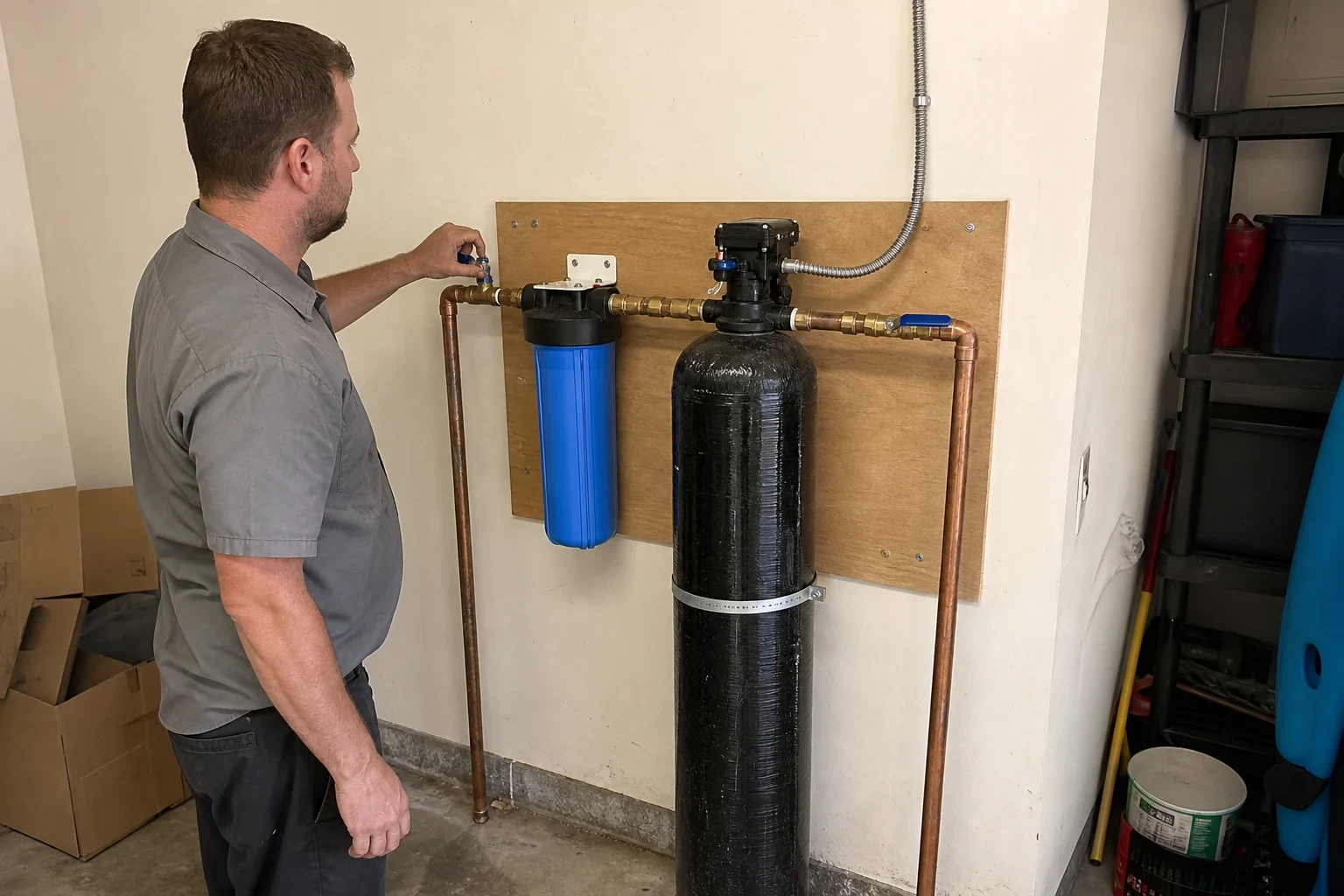
A test turns a vague complaint into a clear plan. Tell us what you are noticing and we will set up a visit that fits your schedule.