ServicesWater softeners
Water Softeners in University Park After a Hardness Test
A softener only earns its keep when your water is hard enough to cause scale. We measure hardness at your tap first, then size the resin tank and control valve to the result and your household's water use. If you don't need one, we tell you.
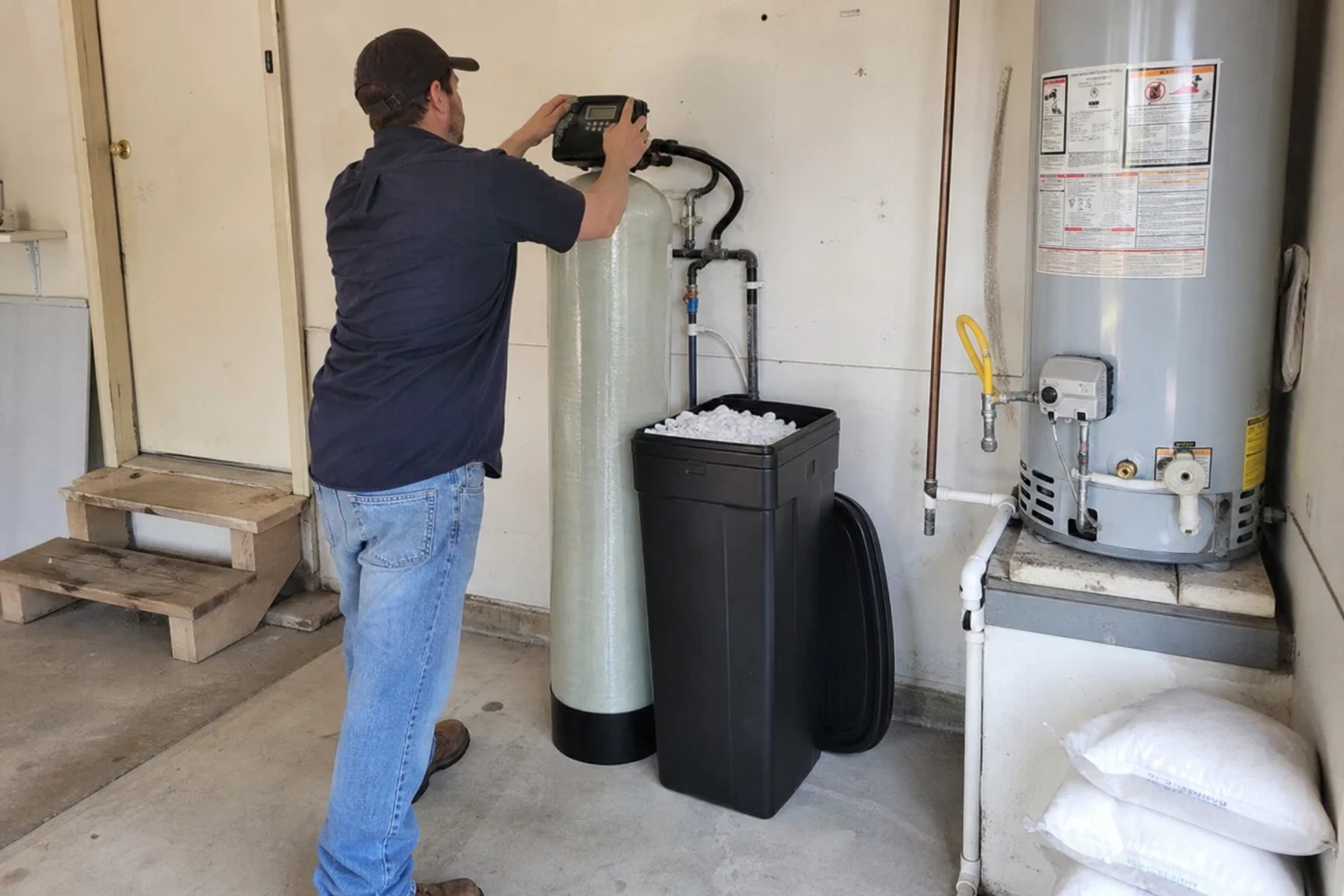
Why we test before we sell a softener
A water softener works by ion exchange. Water passes through a tank of resin beads that trade sodium or potassium for the calcium and magnesium that form scale. When the resin is loaded, the control valve flushes it with brine from the salt tank and the cycle starts over. That process uses salt, water and floor space, so it should solve a measured problem.
Hardness is reported in grains per gallon. Water across the Dallas area can shift during the year, so a single number from a utility report does not tell you what is coming out of your own taps. We test at your home, check for iron and chlorine that can foul resin, and then give you a straight answer on whether a softener makes sense.
If it does, we help you plan it before scale becomes a repair bill. Treating hardness ahead of time protects a new tankless water heater or dishwasher. Waiting until a heating element fails means paying for the softener and the damage in the same month.
What a softener installation includes
Hardness and iron testing
We measure total hardness in grains per gallon and check iron, which can coat resin beads. Those two numbers decide capacity and whether you need a prefilter.
Sizing by grain capacity
We multiply your hardness by your household's daily water use to size the resin tank. An undersized unit regenerates too often and wastes salt. An oversized one can let resin sit and channel.
Metered control valve
We favor demand-initiated valves that regenerate based on gallons used rather than a fixed timer. That keeps salt and rinse water in line with what you actually draw.
Bypass, drain and loop work
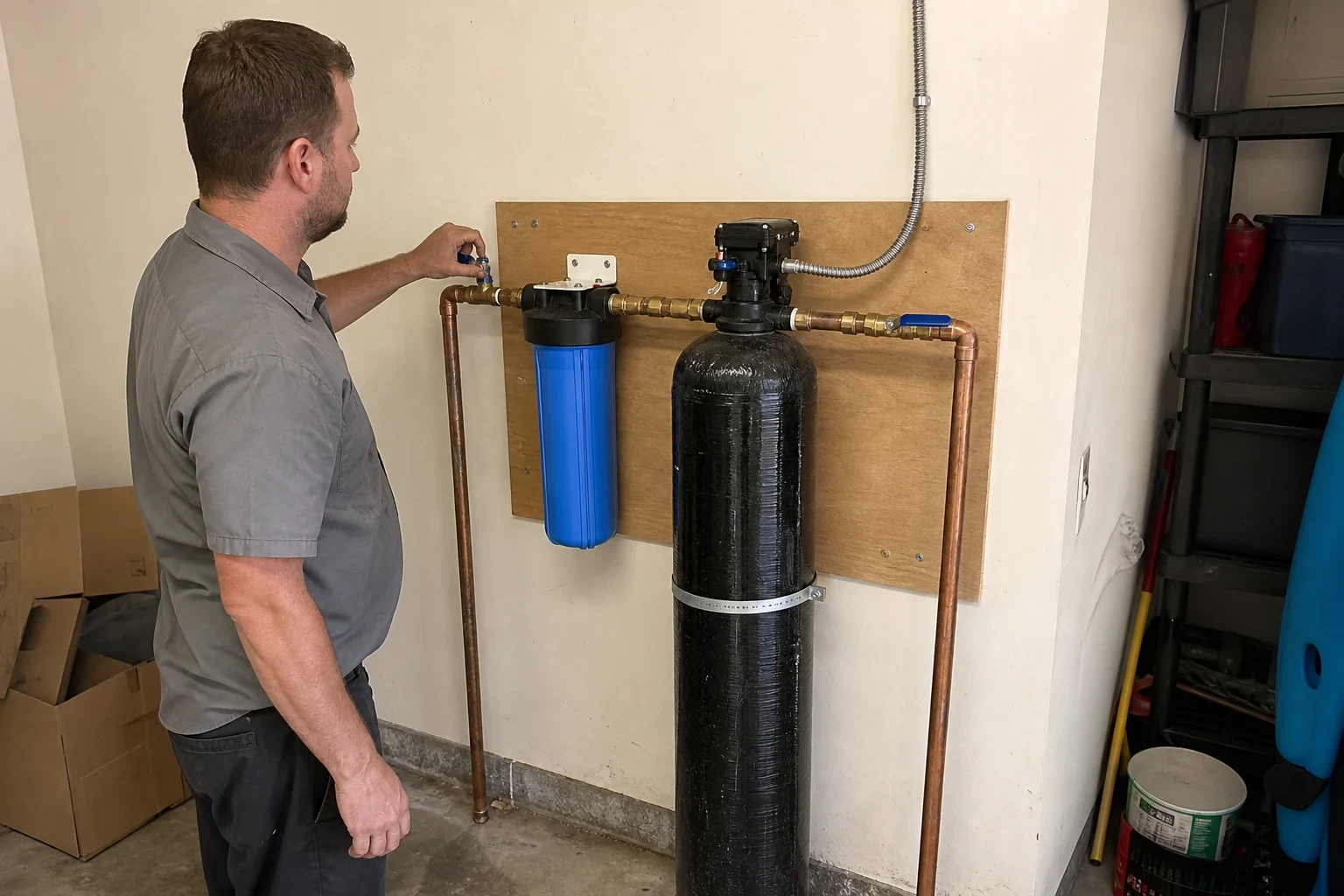
Every install gets a bypass valve so water can run around the unit during service. We run the drain line with a proper air gap and tie into the plumbing where the main line enters, usually in the garage or a utility area.
Setup and first salt fill
We program the valve for your hardness, load the brine tank and run a manual regeneration. Then we retest the treated water so you see the change before we leave.
Signs a hardness test is worth scheduling
- White crust on fixtures
- Chalky rings on faucet aerators, showerheads and glass doors are calcium carbonate. Scrubbing removes it for a week, then it comes back.
- Spotted dishes and cloudy glassware
- Hard water leaves mineral film after the dishwasher dries. Extra rinse aid hides it but does not change the water.
- Water heater noise or slow recovery
- Popping or rumbling from a tank heater often means scale has built up on the bottom. Tankless units may throw scale or flow errors.
- Soap that won't lather
- Calcium and magnesium bind with soap, so shampoo and detergent take more product to work. Clothes can feel stiff after washing.
- Planning a new water heater or appliance
- Testing before a big appliance purchase lets you decide on softening while the plumbing is already open, instead of after the first descaling bill.
How a softener job runs
- 1
Test at your tap
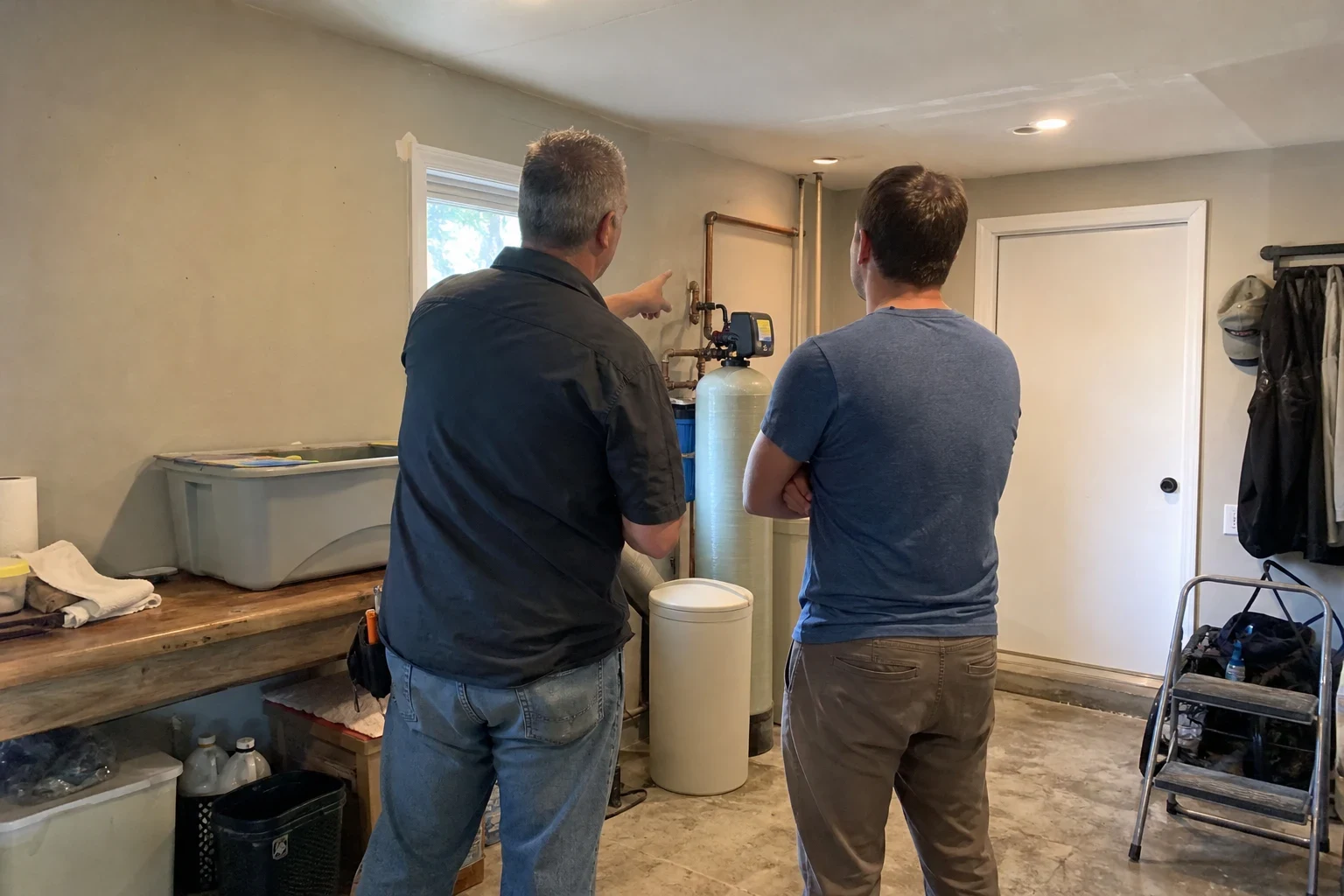
We draw samples from a kitchen faucet and an outside hose bib, test hardness and iron, and walk you through the results on the spot.
- 2
Written plan and estimate
If softening fits, you get a line-item estimate naming the unit size, valve, any prefilter and the plumbing work. If it doesn't fit, we say so and suggest whether carbon filtration or nothing at all is the better call.
- 3
Installation day
We shut off the main, cut in the bypass loop, set the resin and brine tanks, and run the drain. Water is usually off for a few hours, and we lay down drop cloths where we work.
- 4
Programming and retest
We set the valve, regenerate the resin and confirm soft water at a faucet. You get a simple schedule for checking salt and a reminder of what to watch.
What moves the cost of a water softener
Softener pricing depends far more on your water and your plumbing than on the brand on the tank. Testing first lets us price the right size instead of guessing high. Here is what changes the number on your estimate.
- Hardness and household size
- Harder water and more people mean more grains to remove each day. That calls for a larger resin tank and a bigger brine tank.
- Iron or chlorine pretreatment
- Iron fouls resin and chlorine slowly breaks it down. If the test shows either, a sediment or carbon prefilter may be added to protect the softener.
- Install location and plumbing access
- A main line that is easy to reach costs less to loop than one buried in a wall or slab. Running a drain line a long distance also adds labor.
- Valve type
- Metered valves cost more up front than timer valves but usually use less salt and water over the years.
- Ongoing salt and service
- Plan for bags of salt and an occasional resin or valve check. Our filter replacement and maintenance visits can fold this in with any other filters in your home.
Water softener questions
- Is the water in my area hard enough to need a softener?
- It depends on your home's supply and the season, which is why we test before recommending anything. Some homes read soft enough that a softener would add salt and upkeep for little benefit. Others read high enough to scale a water heater within a few years. The test settles it.
- Will softened water taste salty?
- Usually not at normal hardness levels. The amount of sodium added rises with how hard the water was to begin with. If you prefer, we can use potassium chloride instead of sodium, or pair the softener with under-sink reverse osmosis for drinking water.
- Does a softener filter out chlorine or contaminants?
- No. The resin beads swap out calcium and magnesium and leave everything else in the water as it was, including chlorine and any trace compounds. If taste or odor bothers you, whole-house carbon filtration is the part that handles it. Mounted upstream of the softener, the carbon also keeps chlorine from wearing down the resin.
- How often do I add salt?
- Most homes check the brine tank monthly and add a bag or two when the salt drops below the water line. Usage depends on hardness and how much water you use. We also show you how to break up salt bridges, a hard crust that can stop regeneration.
- How long does installation take?
- Most installs take a few hours once we arrive. Water is shut off while we cut in the bypass loop, and we restore it as soon as the connections hold pressure.
Find out if a softener is worth it for your home
We'll test your water, show you the numbers and give you a written plan you can budget for. If you don't need a softener, you'll know that too.