ServicesIron and sediment filtration
Iron and Sediment Filtration in University Park
We find where the rust, grit or orange staining in your water starts, then fit the right filter at the right point on the line. You get test results, a written estimate and a maintenance schedule before any pipe is cut.
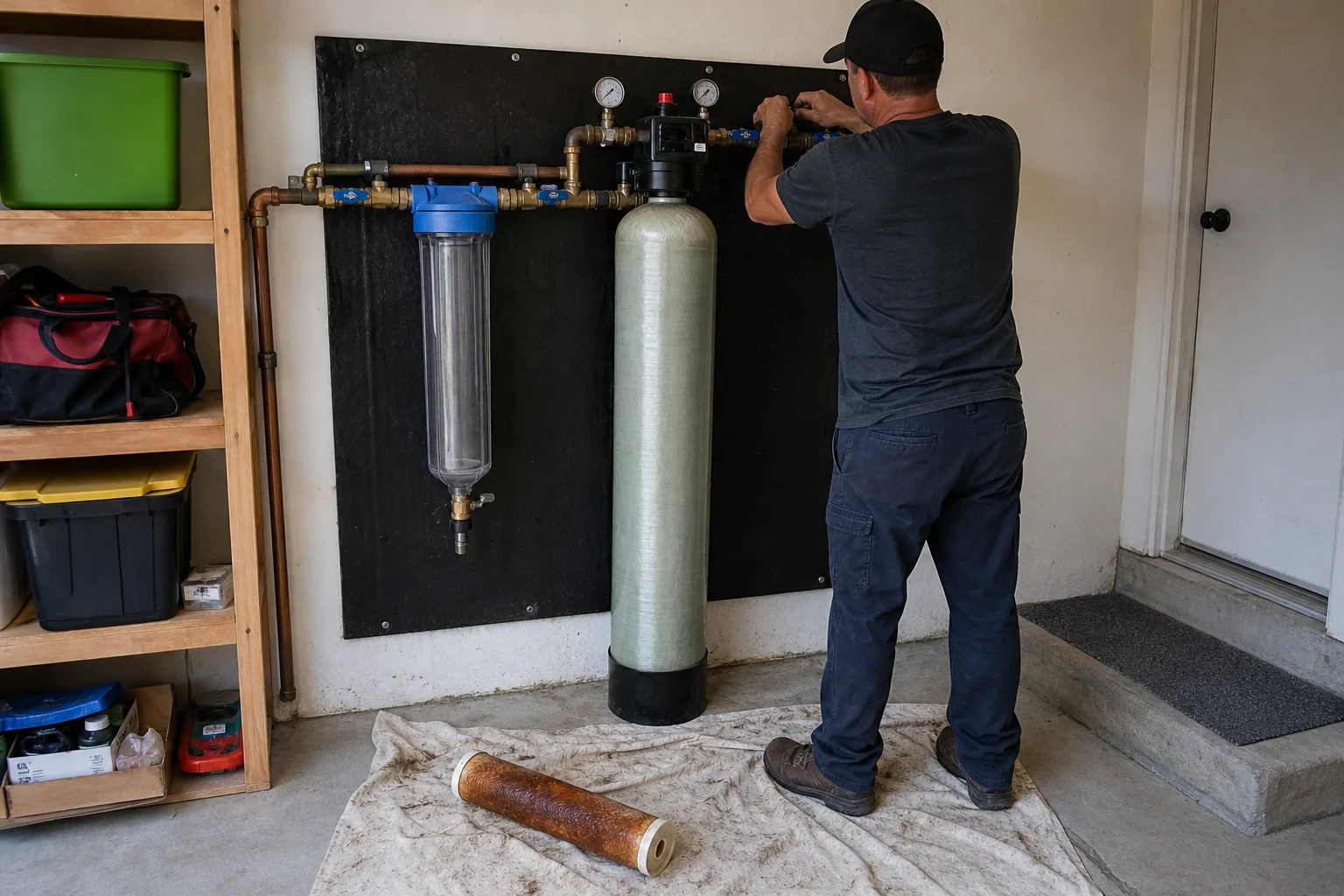
What iron and sediment filtration fixes
Iron and sediment show up as orange rings in toilet bowls, gritty aerator screens, cloudy first draws and rust spots on white laundry. On city water the source is often inside the house: corroding galvanized supply lines, a water heater shedding scale, or sediment stirred loose after main work on the street. On a private well it is usually dissolved iron in the groundwater itself.
That difference decides the equipment. Particles you can see are caught mechanically by a spin-down screen or a pleated cartridge. Dissolved (ferrous) iron passes straight through those filters and only turns to rust after it meets air or chlorine, so it needs an oxidizing media tank or a different plan. We test first so you pay for the filter that matches the cause.
We also look ahead with you. A filter protects fixtures and appliances, but if aging pipe is shedding the rust, you should know that now so you can budget for that repair on your own schedule instead of after a leak.
What the work includes
Iron and particle testing
We check total iron, dissolved iron, manganese and pH, and look at turbidity in a clear sample. If the numbers need a lab, we send a sample out as part of our water testing service.
Spin-down sediment prefilter
A clear housing with a stainless or nylon screen sits on the main line and catches sand, pipe scale and grit. A flush valve at the bottom lets you purge it in seconds without changing anything.
Cartridge housings with a bypass
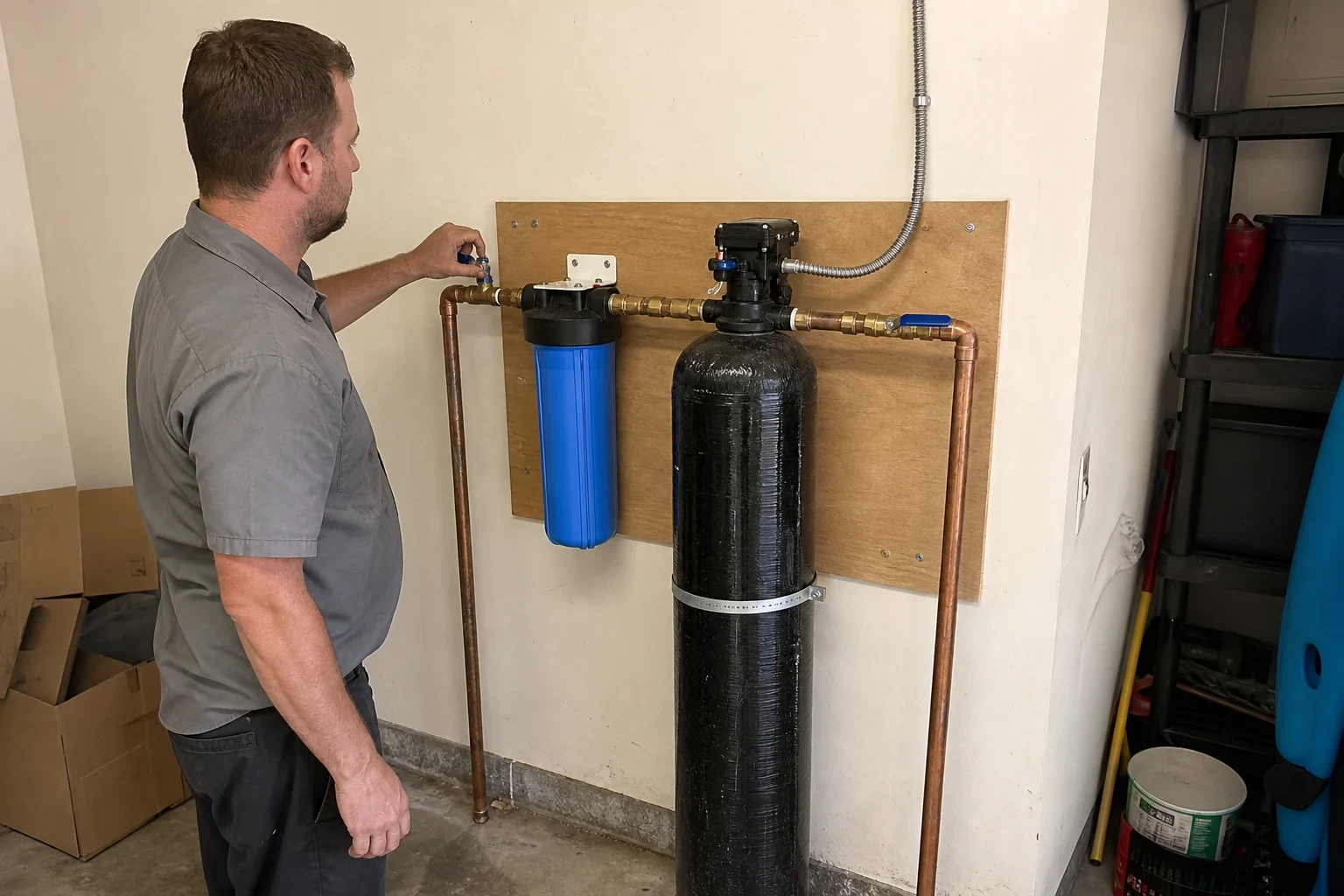
For finer particles we install large-format housings with pleated or melt-blown cartridges rated in microns. A three-valve bypass lets you swap a cartridge without leaving your home without water.
Oxidizing iron filter for wells
Where dissolved iron is the problem, we size a backwashing tank with oxidizing media such as catalytic carbon or manganese dioxide. These media depend on pH, which is why we measure it before choosing one.
Pressure gauges before and after
Gauges on both sides of the filter show the pressure drop across it. When the gap widens, the cartridge is loaded, so you change it based on what the water is doing, not a guess.
Warning signs of iron and sediment in your lines
- Rust rings on porcelain
- Orange or brown rings in toilet tanks, tubs and sinks usually mean iron. If they reappear a few days after scrubbing, the iron is coming in steadily rather than in a single slug.
- Grit in aerators and showerheads
- Sand or flakes caught in faucet screens are particles a sediment filter stops. Black flakes often come from pipe scale, white chips usually from the water heater.
- Clear water that turns rusty in a glass
- If a fresh glass looks clean and goes orange after sitting, the iron is dissolved. A plain cartridge will not catch it.
- Rust on the hot side only
- When cold water runs clear and hot water is discolored, the water heater is the likely source. We will tell you that plainly, because flushing or replacing the anode rod may be the real fix instead of a filter.
- Falling pressure at fixtures
- Washing machine inlet screens and dishwasher valves clog with sediment first. Slow fill times are often the earliest warning.
- Metallic taste
- Iron gives water a tinny, bitter edge, most noticeable in coffee and tea.
How the job runs
- 1
A call about what you are seeing
We ask where the staining shows up, hot or cold side, city or well, and how old your plumbing is. That narrows the cause before we arrive.
- 2
Testing and tracing the source
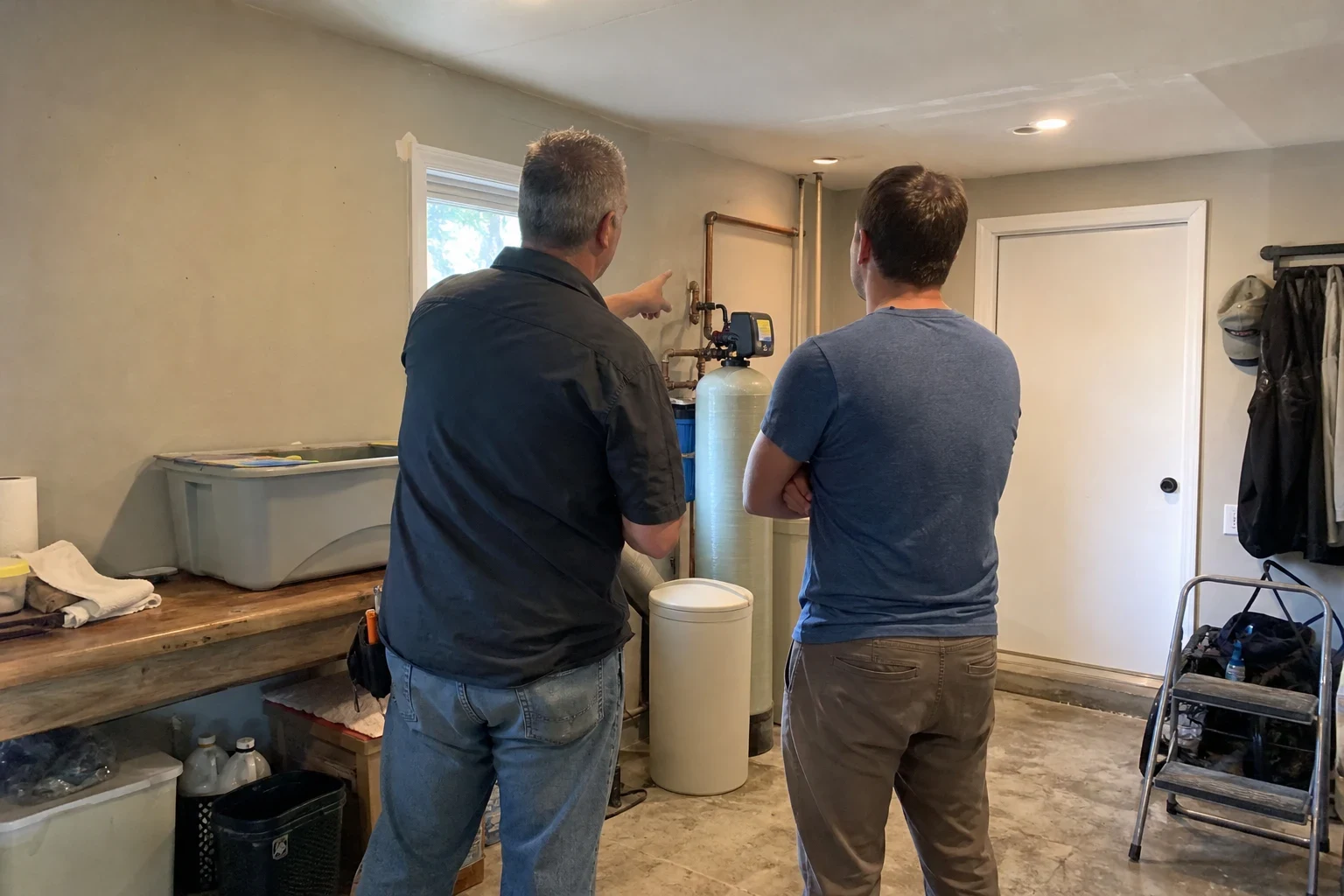
We run hot and cold taps separately, test the water and look at pipe material at the entry point and the water heater. You see the results as we get them.
- 3
A written estimate with options
You get a line-item estimate covering the filter, fittings, labor and expected cartridge or media costs over time. If the fix belongs elsewhere, such as the water heater, we say so.
- 4
Installation day
We shut off the main, cut into the line near where water enters your home, and install the bypass, housings and gauges. Then we flush the system, check every joint for leaks, protect the floor and clean up.
- 5
Hand-off and schedule
We show you the flush valve, the bypass and how to read the gauges, and leave a written schedule for cartridges or media.
What moves the cost
Price depends mostly on what kind of iron or sediment you have and how much water your home uses at once. A simple spin-down screen and a whole-house iron tank are very different jobs. We price the job after testing so the estimate matches the cause.
- Particles or dissolved iron
- Mechanical filtration for grit costs far less than an oxidizing media tank with a backwash valve.
- Flow rate and bathrooms
- More bathrooms mean higher peak flow, which calls for larger housings or tanks so pressure holds when two showers run.
- Location and pipe material
- Access at the entry point, pipe size and material (copper, PEX or galvanized) change the fittings and labor. Backwashing tanks also need a drain and an outlet nearby.
- Ongoing maintenance
- Cartridge size and micron rating set how often replacements come due. We list those costs up front so you can budget for the year.
Iron and sediment filtration questions
- Will a sediment filter remove iron?
- Only iron that is already rust, meaning visible particles. Dissolved iron is invisible and slips through a cartridge, then oxidizes later in your fixtures. Testing tells us which kind you have before you buy anything.
- Should I get a water softener instead?
- A softener can take out small amounts of dissolved iron, but iron fouls the resin over time. We only recommend a softener when a hardness test supports it, and we cover that on our water softeners page.
- Will a filter lower my water pressure?
- A correctly sized housing causes a small, steady drop you will not notice. Pressure falls noticeably only when a cartridge is loaded, which is what the gauges are there to show you.
- How often will I replace cartridges?
- That comes down to the sediment load in your supply. With a light load a cartridge can last many months, while a heavy load may fill one in a few. We set a starting interval, then adjust it from the gauge readings, and our filter replacement and maintenance service can take the job off your list.
- Can a filter fix rusty pipes?
- No. It protects fixtures and appliances from what the pipes shed, but the pipes keep corroding. If we see that, we tell you so you can plan the repair with a plumber before it turns into a leak.
Plan the filter before rust spreads
Describe the staining, grit or taste on the phone and we will walk through the likely cause and which test would confirm it. That leaves you time to budget for the filter and its upkeep before rust reaches your fixtures.