ServicesFilter replacement and maintenance
Filter Replacement and Maintenance in University Park
Every filter has a capacity, and once it is used up the water quality drops long before the flow does. We change cartridges, service RO units and check softeners on a set calendar, so you see the next visit and its cost months ahead.
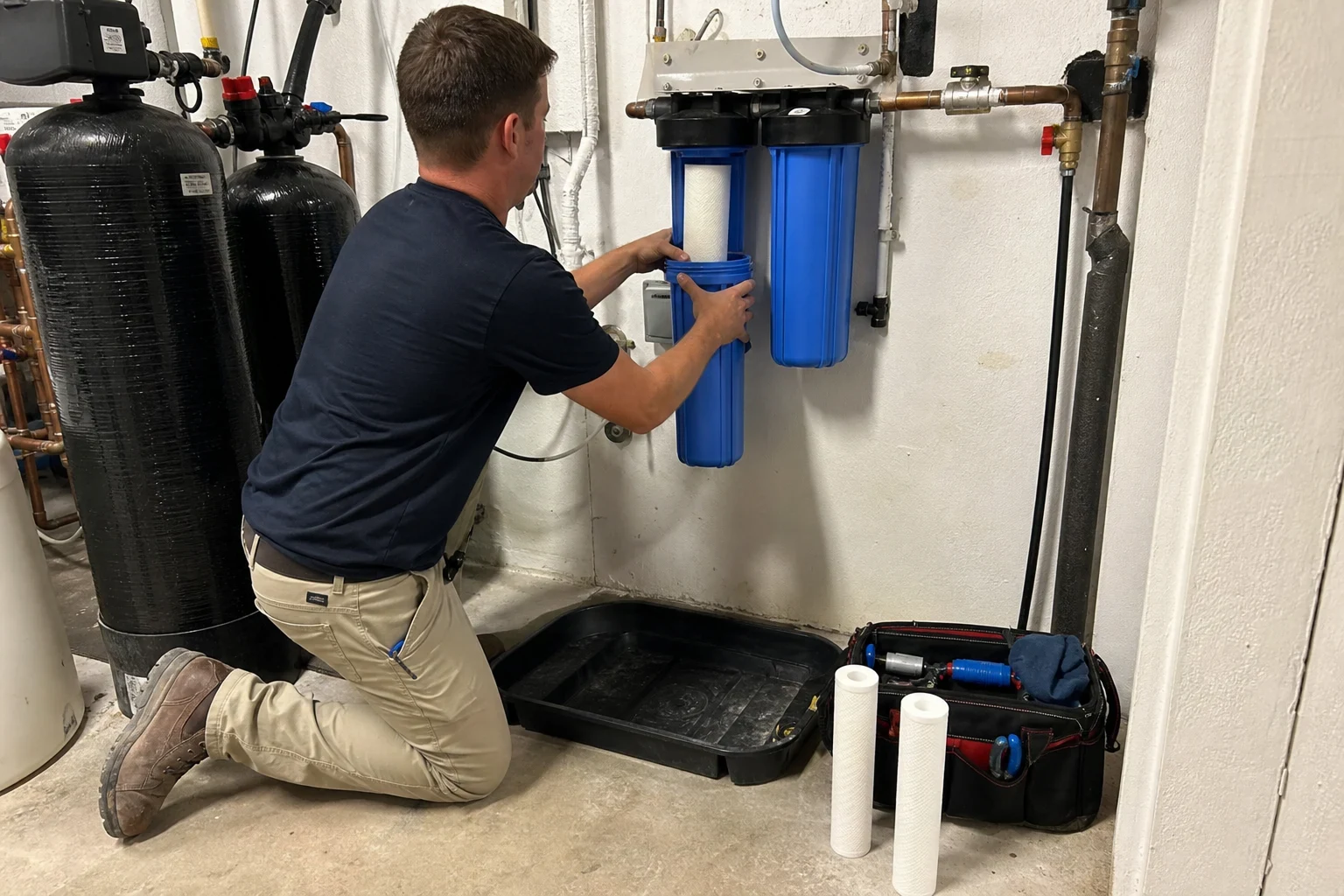
Why filters need a calendar, not a reminder light
A sediment cartridge fails loudly: pressure at the shower drops as the pleats load with grit. A carbon cartridge fails quietly. Activated carbon removes chlorine taste and odor by adsorption, and when its surface sites are full, the disinfectant passes straight through while the water still runs at full pressure. Most people notice weeks late, if at all.
Our approach is to log each system in your home, note the cartridge type, the date it went in and your household's water use, and set the next change from that. You get a simple maintenance plan you can budget for, instead of a surprise when the faucet starts tasting like a pool.
We service the equipment we install, whole-house carbon systems, iron and sediment filtration, under-sink reverse osmosis and softeners, and we also maintain systems someone else put in, as long as replacement parts are available.
Inside a routine service call
New cartridges sized to your housings
Each sediment, carbon block or specialty cartridge we fit carries the right micron rating, length and diameter for the housing it goes into. A cartridge that is even slightly short lets water slip around the end caps unfiltered, so we confirm the part number rather than guessing by size.
O-ring and housing inspection
Housing O-rings flatten and crack with age. We clean the groove, inspect the ring, replace it if it has taken a set and lubricate it with food-grade silicone so the housing seals without overtightening.
Reverse osmosis service
Prefilters and the post carbon filter get changed, and the membrane is checked against a TDS reading of tap versus filtered water. We also check the storage tank's air charge, which should sit around 7 to 8 psi with the tank empty, and sanitize the lines when the system calls for it.
Softener checkup
We look for salt bridging in the brine tank, confirm the control valve's hardness setting and regeneration schedule, and check that the unit is actually drawing brine. A softener that stops drawing brine keeps cycling but stops softening.
Pressure and bypass check
Where gauges are installed, we read pressure before and after the filter to see how loaded the media is. We also exercise the bypass valve so it turns freely when you need it.
A written record and the next date
You get a note of what was replaced, what we saw and when the next change is due, with the parts listed so the cost is clear in advance.
Signs your filters are overdue
The chlorine taste has returned
When water from a whole-house carbon system picks up a chlorine smell or taste again, the carbon is used up. The flow stays the same, so your nose is the warning, not the faucet.
Weaker pressure at every fixture
A sediment cartridge packed with particles chokes flow throughout the house. If the shower loses strength, and gets worse when a second tap is on, check the prefilter first.
RO faucet trickles or the tank stays low
Low output can come from a plugged prefilter, a fouled membrane or a storage tank that has lost its air charge. We test to pin down which before swapping parts.
Cartridges come out dark or slick
A used cartridge that is brown, orange or slimy points to a heavy load of sediment, iron or biofilm. It may mean your water needs a shorter interval, and we change the plan to match.
Nobody knows when it was last serviced
If the system came with the house and its service history is unknown, assume it is past due. One baseline visit starts the calendar fresh.
How a service visit runs
- 1
Phone call and parts list
We ask what equipment you have, ideally with the brand and model read off the label or housing, and confirm cartridge sizes before the visit. That way we arrive with the right parts instead of coming back.
- 2
Shut off and depressurize
We put the system into bypass or close the supply valves, relieve pressure and lay down towels or a drip pan. Under-sink work stays inside the cabinet footprint.
- 3
Replace, clean and reseal
Old cartridges come out, housings are rinsed and checked for cracks, O-rings are serviced and new media goes in. RO systems get their TDS check and tank pressure set.
- 4
Flush and leak check
New carbon releases fine dust, so we flush each filter to drain until it runs clear, then watch every fitting under pressure. We take the old cartridges with us.
- 5
Set the next date
Before we leave, we note the next service and what it will involve, so it goes into your household budget instead of catching you off guard.
What moves the cost of filter maintenance
Most of the cost is the media itself, and that depends on what is installed in your home. Labor is fairly steady for a routine change. We give you the line items by phone before the visit, and the plan shows what each future visit will include.
- Type and number of cartridges
- A single sediment cartridge is a small part. A whole-house carbon tank, a large-diameter carbon block or a full RO set with prefilters, membrane and post filter costs more.
- Membrane replacement years
- RO membranes usually last several years, longer than the prefilters. The visit where the membrane is due costs more, which is exactly why we put it on the calendar early.
- Access and condition
- A filter in a crowded cabinet or a tight garage corner takes longer. Cracked housings, seized fittings or a failed tank add parts to the bill, and we show you the problem before replacing anything.
- Brand and part availability
- Common standard-size cartridges are easy to source. Proprietary cartridges for some systems cost more and can take time to order.
Questions about keeping filters current
Something not covered here? (214) 379-7564
What change interval do my cartridges need?
That comes down to the cartridge type and how much water your household runs through it. RO prefilters and sediment cartridges typically last somewhere between 6 and 12 months, while an RO membrane or a whole-house carbon bed can go a few years. We base the first interval on your equipment, then tighten or stretch it once we see what the spent cartridges look like.
Can I change the cartridges myself?
Many people do, and we are glad to show you how. The common mistakes are the wrong cartridge size, a pinched or dry O-ring and skipping the flush on new carbon. If you prefer to handle routine changes, we can still do the yearly RO and softener checks.
Will you service a system you did not install?
Yes, as long as parts are available for it. Read us the brand and model from the label when you call, and we will tell you whether we can source the cartridges before scheduling a visit.
Does a softener need maintenance too?
Yes. Salt needs topping up, bridges in the brine tank need breaking up and the hardness setting should match a current test. If you are not sure the softener is needed at all, our water testing service can answer that first.
How long does a visit take?
A routine cartridge change is usually done within an hour. A full RO service with sanitizing, or a visit that covers several systems, takes longer, and we tell you the expected time when we schedule.
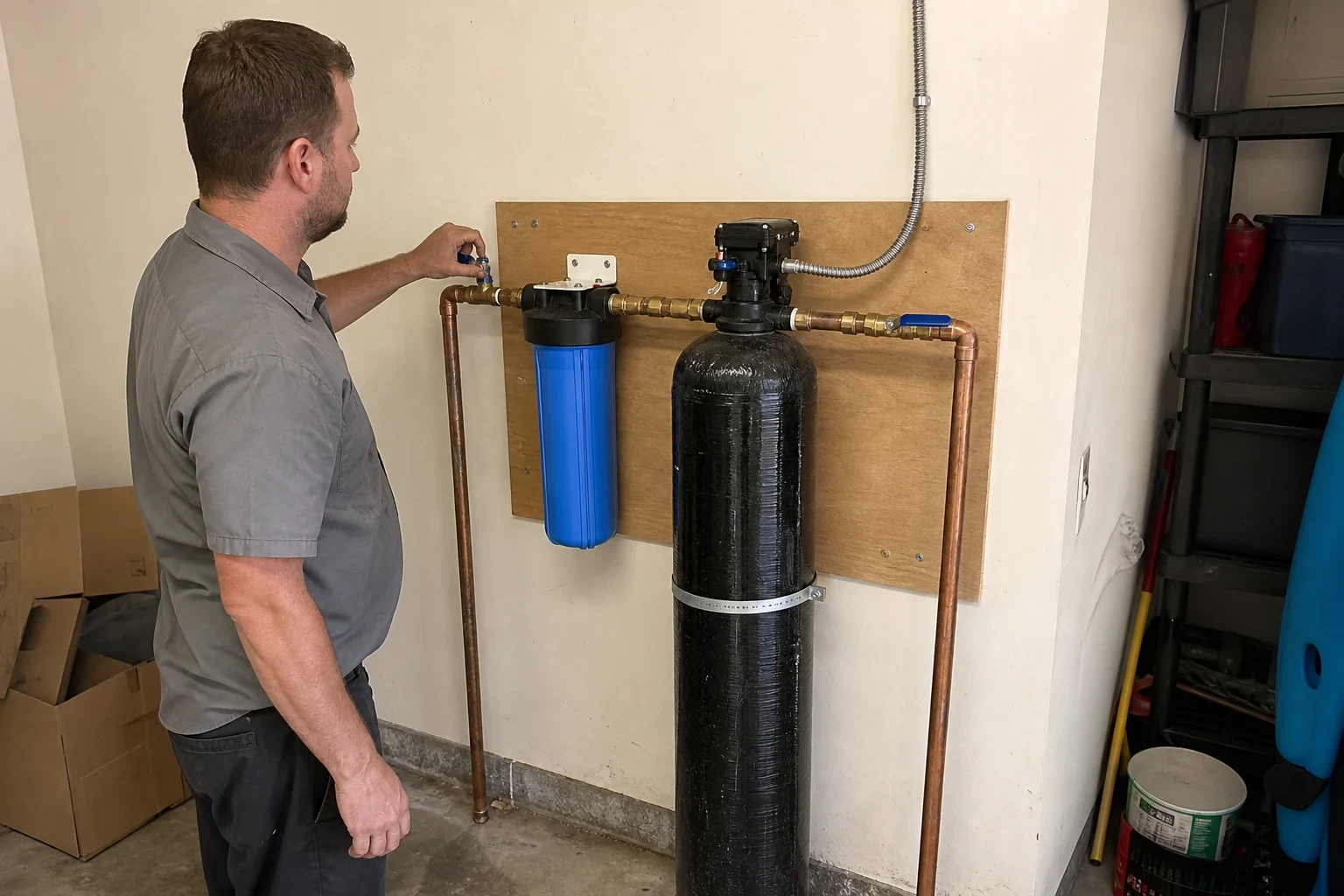
Put your next filter change on the calendar
Tell us what is installed in your home, and we will work out the intervals, the parts and what each visit costs, so maintenance becomes a line in your budget instead of a surprise.